Inco Terms
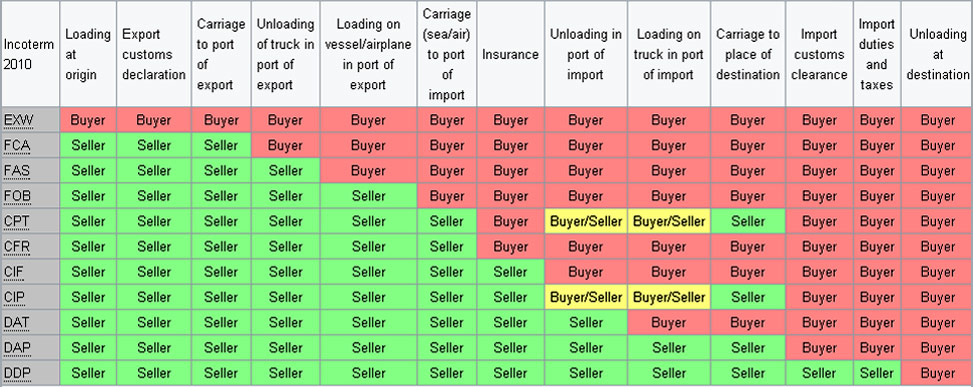
Incoterms, promulgated by the International Chamber of Commerce, is an acronym for “International commercial terms,” and provide a standard set of definitions for trade terms (also known as delivery terms and terms of sale) for use in international trade. The eleven terms (as of Incoterms 2010, effective January, 2011) are: EXW, FCA, FAS, FOB, CPT, CFR, CIF, CIP, DAT, DAP and DDP.
Incoterms facilitate international commerce by promoting common and precise understanding between a seller and buyer of their respective operational obligations, costs and passage of risk of cargo loss or damage under various specified delivery arrangements. Citing a particular Incoterm in a sales contract will also aid transportation intermediaries, banks, and service providers involved in shipping or financing the goods better performing their functions. Incoterms are also designed to reduce the likelihood of disputes between a seller and buyer over their respective responsibilities and costs.
Incoterms first edition was published in 1936, in English and French. Since then there have been five revisions at approximately 10 year intervals, with transaction into most commercially used languages. The 1990 revision first addressed the use of electronic messages (EDI) used in lieu of traditional shipping documents. The revision in 2000 made substantive changes to the customs clearance and payment of customs duty obligations under FAS and DEQ terms; and the loading and unloading obligations under FCA. And Incoterms 2010 eliminated terms DAF, DES, DEQ and DDU, replacing these with new terms DAT or DAP.
Note: Incoterms are separate and significantly different from American Foreign Trade Definitions, which are incorporated into the Uniform Commercial Code (UCC), continue to be used by some companies in domestic U.S. commerce, and have been recommended for deletion from the UCC.